
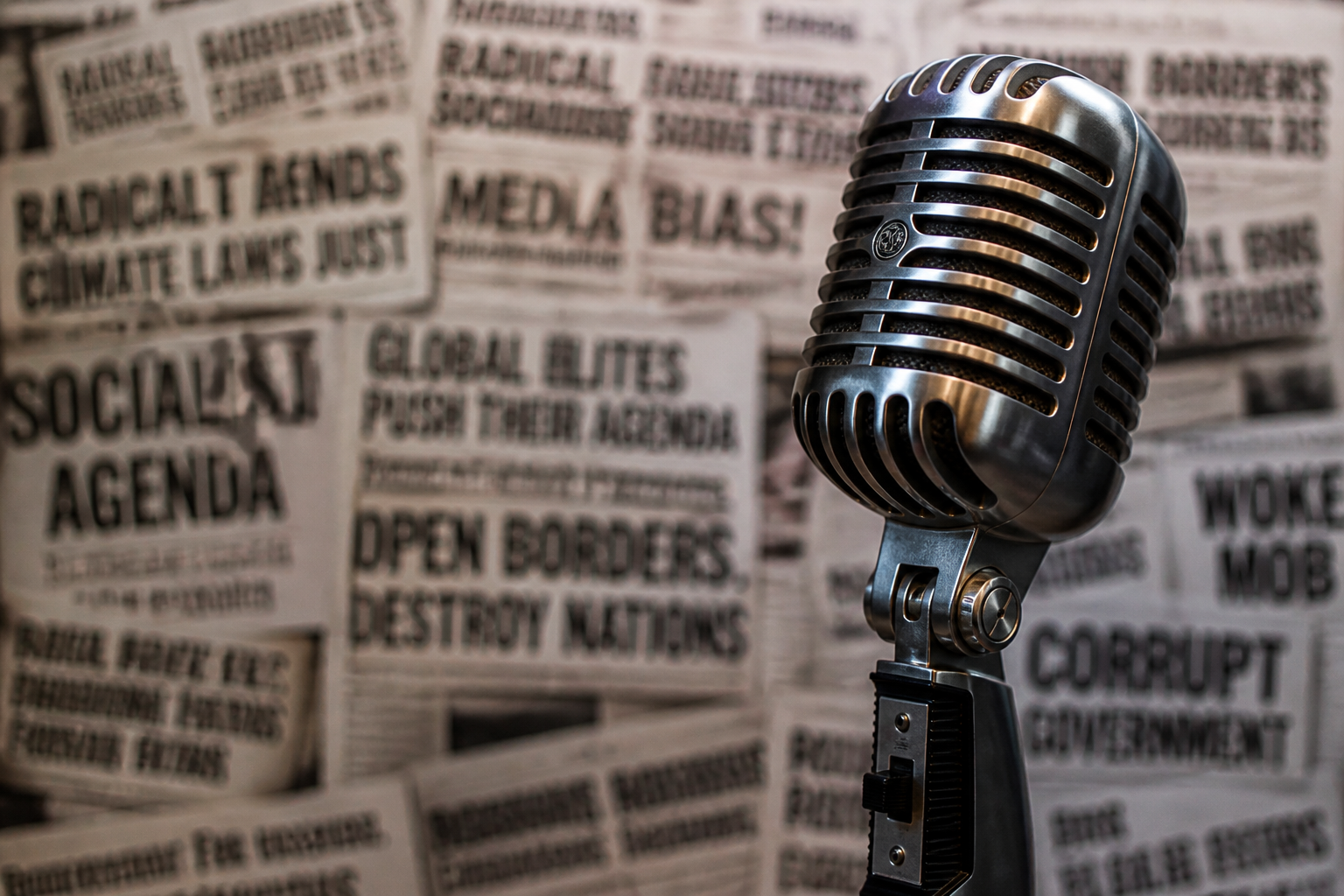
The Unspoken Bias in Every Broadcast
Have you ever watched the evening news and felt like you were observing events from an alternate reality? You see a story you know intimately, a political rally you attended, or a policy debate you’ve studied, only to see it presented through a lens so distorted it’s barely recognizable. For millions of conservatives, especially Black conservatives, this isn’t a rare occurrence. It’s a daily experience. The mainstream media’s liberal bias is not a myth cooked up by the right wing; it is a pervasive and damaging force that shapes public opinion, stifles debate, and reinforces a narrow, progressive worldview.
This bias isn’t always about outright lies. It’s far more subtle and, in many ways, more effective. It operates through story selection, framing, and the choice of language. A protest for conservative values is often a “contentious gathering,” while a left-wing protest that results in property damage is described as “mostly peaceful.” A conservative politician’s misstatement is a sign of incompetence or malice, while a liberal politician’s gaffe is a harmless slip of the tongue. The media acts as a gatekeeper, deciding which stories are worthy of national attention and which voices are qualified to speak on them.
The Special Scorn for Black Conservatives
Nowhere is this bias more pronounced than in the treatment of Black conservatives. The liberal media establishment operates on the unspoken assumption that Black Americans are a monolithic political bloc, united in their support for the Democratic Party. When a Black person dares to step outside this box, the reaction is not one of respectful disagreement but of outright hostility and delegitimization.
Consider the contrast in coverage. Figures like Kamala Harris or the late John Lewis are treated with a reverence typically reserved for saints. Their policy positions are rarely scrutinized with any real rigor. But a Black conservative like Supreme Court Justice Clarence Thomas? He is relentlessly smeared and caricatured. Economic scholars like Thomas Sowell or Walter Williams, whose work has profoundly challenged progressive orthodoxy, are largely ignored by the mainstream press. Elected officials like Senator Tim Scott or Representative Byron Donalds are often framed as anomalies or sellouts, rather than as representatives of a valid and growing political movement within the Black community.
The message is clear: You are welcome in the public square as a Black person, so long as you echo the approved progressive talking points. If you advocate for school choice, champion individual responsibility, or believe in the principles of limited government, you will be marginalized, ridiculed, or simply erased from the conversation.
Textbook Examples of a Tilted Playing Field
The evidence of this systemic bias is overwhelming and well-documented. We all remember the 2020 election cycle, when the New York Post’s bombshell story on Hunter Biden’s laptop was actively suppressed. Major news outlets dismissed it as “Russian disinformation,” and social media platforms censored it. It was only after the election was safely over that the same outlets quietly admitted the story was, in fact, true. This was not journalism; it was election interference designed to protect a preferred candidate.
Look at the coverage of crime and law enforcement. When a story fits the narrative of systemic police brutality, it receives 24/7 coverage for weeks. But when rising crime rates devastate minority communities—a direct result of progressive “defund the police” policies—the media often looks the other way or blames other factors. The victims of these policies, many of whom are Black residents desperate for safer streets, are rarely given a platform.
Even the so-called “fact-checkers” have become a tool of the progressive left. They are frequently used to label conservative opinions as “false” or “misleading” without engaging with the core arguments. It’s a way to shut down debate under the guise of objectivity, creating an environment where only one set of facts is considered legitimate.
Why It Matters for Everyone
This isn’t just about political fairness; it’s about the health of our republic. A biased media erodes public trust, deepens our political divisions, and makes it impossible to find common ground. When half the country believes the primary sources of information are actively working against them, civil discourse becomes nearly impossible.
For Black America, the stakes are even higher. The media’s echo chamber reinforces the dangerous idea that there is only one authentic way to be Black. It silences dissent and prevents a full and honest discussion about the real challenges facing our communities—challenges that cannot be solved by a one-size-fits-all liberal agenda.
The good news is that people are waking up. The rise of independent journalists, podcasts, and alternative media platforms is a direct response to this institutional failure. Americans are seeking out voices that speak to their experiences and values. We are no longer content to be spoon-fed a single, curated narrative. Conservatives don’t want special treatment from the media. We just want a level playing field. We want our ideas to be debated on their merits, not dismissed out of hand. We want our leaders to be held to the same standard as their liberal counterparts. In short, we want journalists to do their jobs. Until that day comes, it is up to each of us to think critically, question the narrative, and seek the truth for ourselves.