
The Narrative is Crumbling
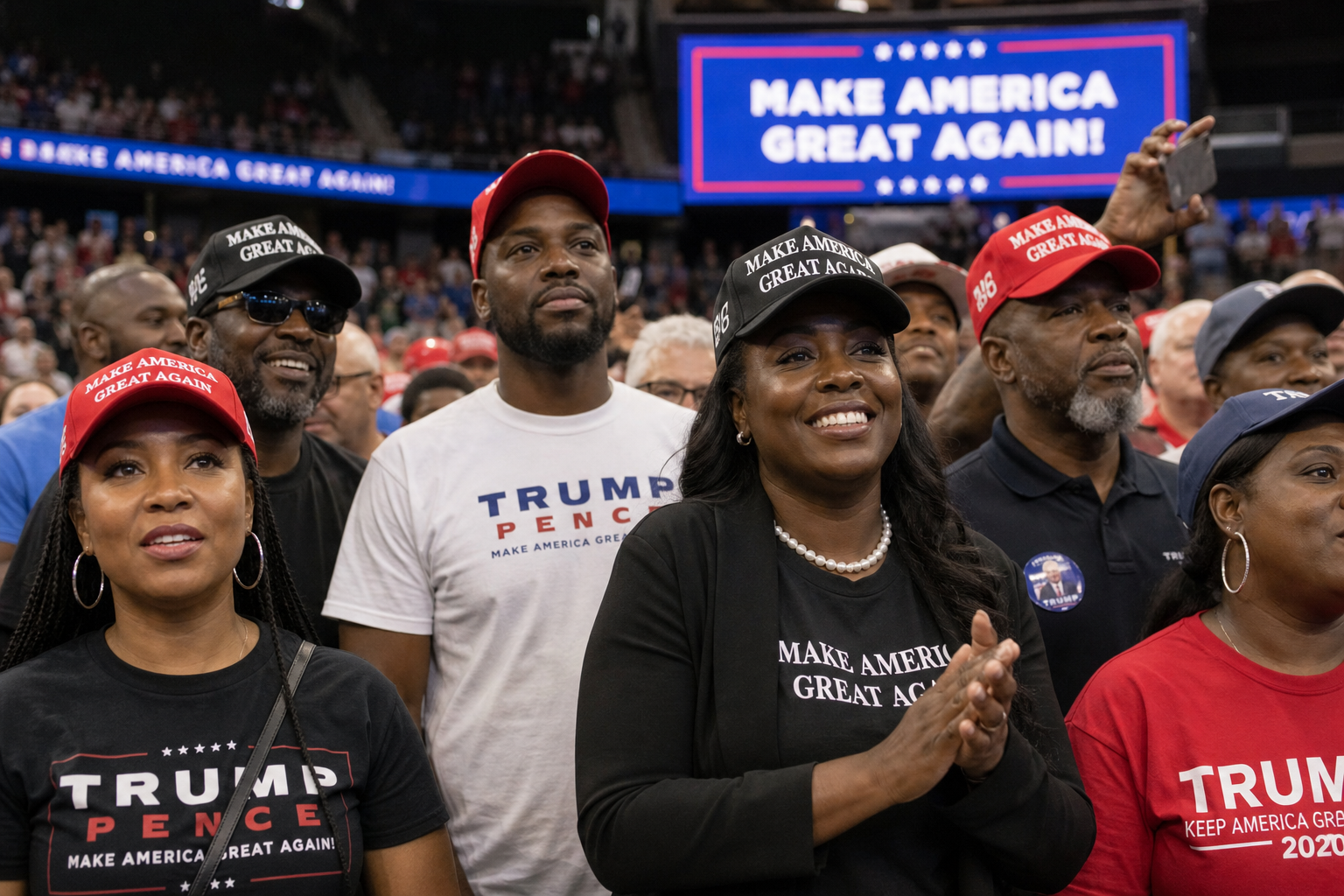
For decades, the political establishment and its allies in the media have operated under a simple, convenient assumption: the Black vote belongs to the Democratic Party. They treat our community as a monolith, a predictable voting bloc whose loyalty can be counted on every four years with little more than a few speeches and empty promises. But as we approach the 2024 election, that tired narrative is facing a reality it can no longer ignore. A significant, and growing, number of Black Americans are looking at Donald Trump and seeing a viable alternative.
Recent polling from sources like The New York Times/Siena College has sent shockwaves through the liberal establishment, showing Trump earning support from over 20% of Black voters in key battleground states. While polls are just a snapshot in time, they confirm what many of us have been seeing on the ground for years. The conversation in barbershops, churches, and family gatherings is changing. The question is no longer if Black voters will support a Republican, but how many, and more importantly, why.
It's the Economy, Not the Rhetoric
One of the biggest drivers of this shift is the economy. Before the pandemic shut down the world, the Trump administration delivered tangible economic results for our community. In 2019, Black unemployment hit 5.4%, the lowest rate ever recorded. Black household median income rose, and poverty rates fell. Policies like the First Step Act addressed disparities in criminal justice, and Opportunity Zones were designed to drive investment into neglected communities.
Many Black voters remember that period of prosperity and contrast it with the economic pain of the last few years. Crippling inflation under the Biden administration has hit Black families the hardest, driving up the cost of groceries, gas, and housing. The promise of a better life feels further away for many, and the Democratic Party’s focus on identity politics and abstract social issues does little to put food on the table or pay the rent. Trump’s message, focused on a strong economy, secure borders, and American manufacturing, sounds like a direct plan to restore financial stability.
A Rejection of the Liberal Status Quo
Beyond the numbers, there’s a deeper cultural current at play. Donald Trump’s persona as an unapologetic fighter who challenges the establishment resonates with many Black Americans, particularly men, who are tired of being lectured to by progressive elites. His refusal to bow to political correctness is seen by many as a sign of strength, not a flaw.
Rapper Sexyy Red recently faced backlash for saying she hopes to see Trump back in the White House, praising him for helping her community and getting her “cousins out of jail.” Her comments reflect a sentiment that is far more common than the media lets on. Public figures like Ice Cube, who worked with the Trump administration on his “Contract with Black America,” have shown a willingness to engage with Republicans to achieve policy goals, rejecting the idea that we should only work with one party.
This isn't about loving every tweet or speech. It’s about recognizing that decades of unwavering loyalty to the Democratic Party have not solved the fundamental issues plaguing many of our neighborhoods: crime, failing schools, and a lack of economic opportunity. Trump’s famous 2016 question, “What the hell do you have to lose?” still echoes because for many, the answer remains the same: not much.
The Diversity of Black Thought
The liberal media often reacts to Black Trump supporters with a mixture of confusion and contempt, frequently dismissing them as misguided, misinformed, or worse. This condescending attitude reveals a profound disrespect for the diversity of thought within the Black community. It assumes that we are incapable of weighing our options and making rational decisions based on our own values and interests.
Black conservatives are not a new phenomenon. Leaders like Justice Clarence Thomas, Dr. Ben Carson, and economist Thomas Sowell have long championed principles of personal responsibility, faith, and free markets. Today, a new generation of leaders like Senator Tim Scott, and Representatives Byron Donalds and Burgess Owens, are carrying that torch in Congress, proving that conservative ideas have a powerful appeal.
They argue, as do I, that empowerment comes not from government dependency, but from strong families, educational freedom through school choice, and the economic liberty to build businesses and create wealth. These are not radical ideas; they are traditional values that have sustained the Black community for generations.
A Political Realignment in Motion
The growing support for Donald Trump among Black Americans is not an aberration. It is a sign of a potential political realignment that threatens the very foundation of the Democratic Party's electoral strategy. It represents a courageous rejection of the political box that pundits have tried to put us in.
Whether this trend will translate into a historic shift in November remains to be seen. But one thing is clear: the days of taking the Black vote for granted are over. Black Americans are independent thinkers, and more of us are choosing to vote based on policies and results, not party labels and historical allegiances. The political landscape is changing, and it's being driven by people who have decided they are Americans first, and their political voice will be heard.