
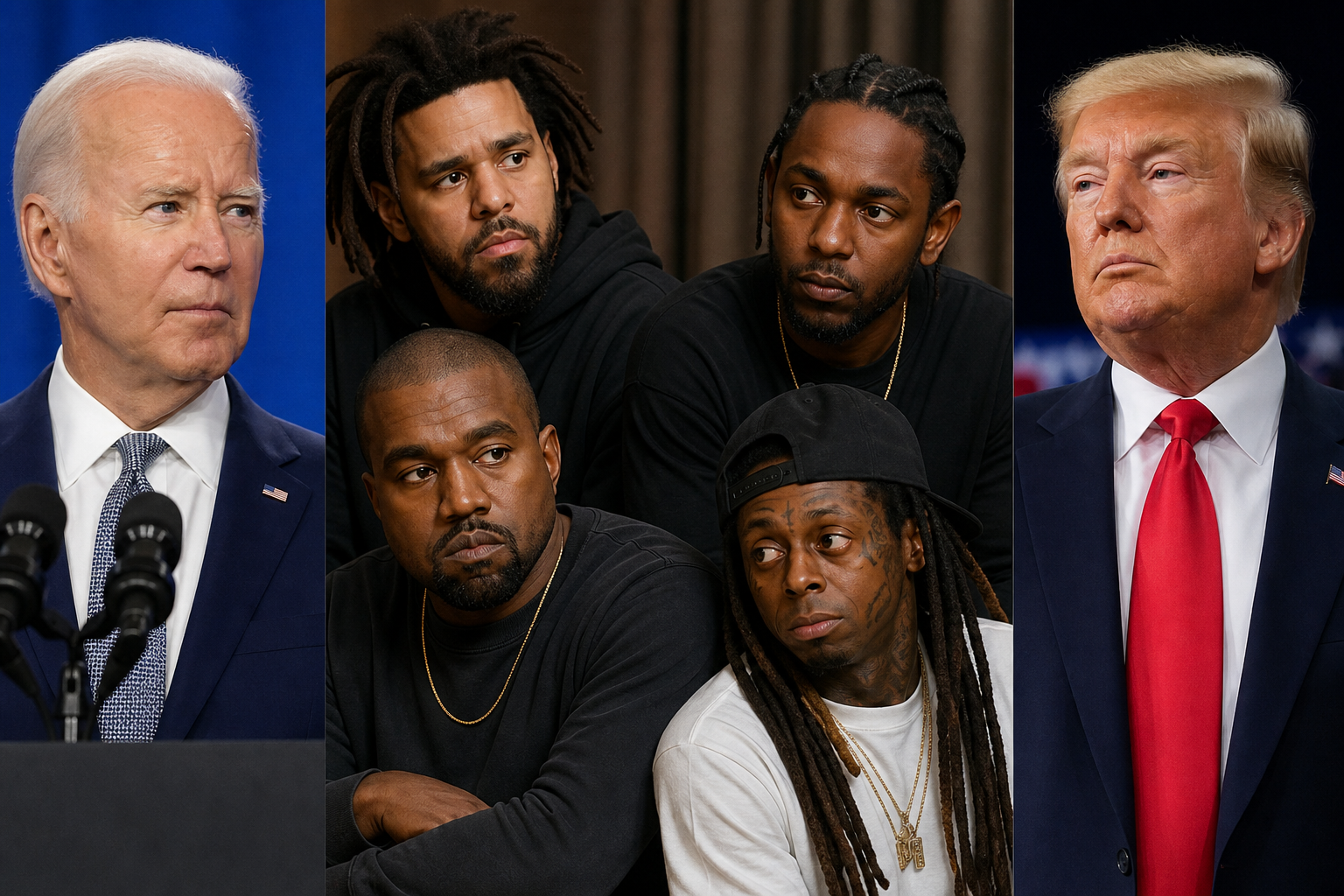
The End of an Era: Hip Hop's Unquestioned Loyalty Fades
For decades, a simple assumption has dominated American politics: hip hop is a cultural arm of the Democratic Party. From celebrity endorsements to get-out-the-vote campaigns, the genre has been a reliable tool for liberal politicians seeking to energize Black voters. But that political monolith is beginning to crack, and the sound it’s making is impossible for the establishment to ignore. A growing number of influential artists are questioning their allegiance, expressing conservative-leaning views, and even openly supporting Donald Trump, signaling a profound shift in both music and politics.
This isn't just a handful of isolated incidents; it's a trend. When St. Louis rapper Sexyy Red recently said she thinks President Trump is “going to get back in office” and praised him for getting her stimulus checks and freeing her favorite rapper, the left-wing media clutched its pearls. They simply couldn't process a popular young artist deviating from the approved script. But she is far from alone. From Ice Cube demanding tangible economic commitments to Kanye West’s infamous MAGA hat, the message is clear: the days of automatic, unthinking loyalty to the Democratic Party are over.
The Trump Effect: An Appeal to Authenticity and Action
To the political elite and mainstream media, Donald Trump’s appeal within the Black community, particularly among men, is a mystifying phenomenon. But to those who value strength, success, and a rejection of the status quo, it makes perfect sense. Hip hop culture has always been aspirational and entrepreneurial. It celebrates outsiders who build empires against all odds. In many ways, Trump’s story—the brash businessman who took on the entire political establishment and won—resonates with the ethos of a rapper who came from nothing to dominate the charts.
Beyond his persona, Trump delivered on issues that mattered to many in the hip hop community. His administration passed the First Step Act, a landmark criminal justice reform bill that disproportionately benefited Black Americans. He also granted clemency and pardons to rappers like Lil Wayne and Kodak Black, actions that stood in stark contrast to the tough-on-crime rhetoric of Democrats like Joe Biden and Kamala Harris from the 1990s. While liberal pundits screamed about rhetoric, Trump took action, and people noticed.
Kanye West, now known as Ye, was one of the first to break the mold by publicly aligning with Trump. He was viciously attacked for daring to think for himself, but his courage opened a door for others. He recognized a fellow disruptor and was unafraid to challenge the groupthink that demands all Black public figures conform to a single political ideology.
Capitalism and Common Sense Over Woke Ideology
At its core, much of hip hop is a celebration of capitalism. Artists rap about building wealth, owning businesses, and achieving financial independence. These are fundamentally conservative values. It should come as no surprise, then, that many artists are starting to recognize that Democratic policies often stand in the way of those goals.
Rapper 50 Cent made headlines when he balked at Joe Biden's proposed tax plans, exclaiming he didn't want to become “20 Cent.” His comment, while humorous, spoke to a serious concern among successful entrepreneurs of all backgrounds: why should my hard-earned success be punished by confiscatory taxes that fund bloated, inefficient government programs? This sentiment is spreading. Artists see the impact of inflation on their communities and question the economic wisdom of the current administration.
Ice Cube took this a step further with his “Contract with Black America.” He refused to blindly endorse either party, instead meeting with the Trump administration to discuss concrete economic proposals aimed at closing the wealth gap. He was criticized by the left for simply engaging with Republicans, but his actions highlighted a growing frustration. For too long, Democrats have offered Black communities symbolic gestures and empty promises, while their policies have failed to produce real economic empowerment. Artists who have built their own fortunes are no longer willing to accept that failed bargain.
A Rejection of Transactional Politics
The Democratic Party’s relationship with hip hop has always been transactional. Every four years, politicians show up, quote a lyric or two, pose for photos with the hottest artist, and then disappear until the next election cycle. They see hip hop not as a culture of diverse thinkers but as a tool for voter mobilization.
This cynical approach is wearing thin. Black voters, including the artists they admire, are tired of being taken for granted. They are beginning to see that their loyalty has been rewarded with deteriorating schools, rising crime in their neighborhoods, and economic stagnation. The new wave of political free-thinkers in hip hop is a reflection of this broader awakening. They are not necessarily becoming Republicans, but they are declaring their independence.
The political landscape is changing. The assumption that the Black vote, and by extension hip hop culture, belongs to the Democratic Party is an outdated relic of the past. As more artists use their platforms to voice independent thoughts, they are empowering their fans to do the same. This diversification of thought is not a threat; it is a sign of a healthy and maturing community that is finally ready to demand results over rhetoric and hold both parties accountable.