
The Great Unraveling of a Political Myth
For generations, a central assumption has dominated American politics: the Democratic Party owns the Black vote. Pundits, politicians, and professors have treated Black Americans as a monolithic bloc, a reliable pillar of the progressive coalition. But a quiet revolution is underway, and that assumption is beginning to crumble under the weight of its own failed promises. More and more Black Americans are looking at the state of their communities, the decline of their cities, and the quality of their children’s education and asking a simple, powerful question: Has unwavering loyalty to one party actually served our best interests?
This isn't just a polling anomaly; it’s a fundamental shift in political consciousness. It is the rise of Black conservatism from the fringes of political discourse to the halls of Congress, state legislatures, and the forefront of our national conversation. This movement is not new, but its growing visibility and influence represent one of the most significant political realignments of our time.
The Intellectual Giants and Their Heirs
The intellectual foundation for modern Black conservatism was laid by brilliant minds who dared to defy progressive orthodoxy. Economists like Thomas Sowell and Walter Williams dismantled the arguments for big government intervention, arguing with data and devastating logic that free markets, not federal programs, were the true engines of prosperity. For decades, they made the case for individual responsibility, school choice, and the rule of law as essential ingredients for success.
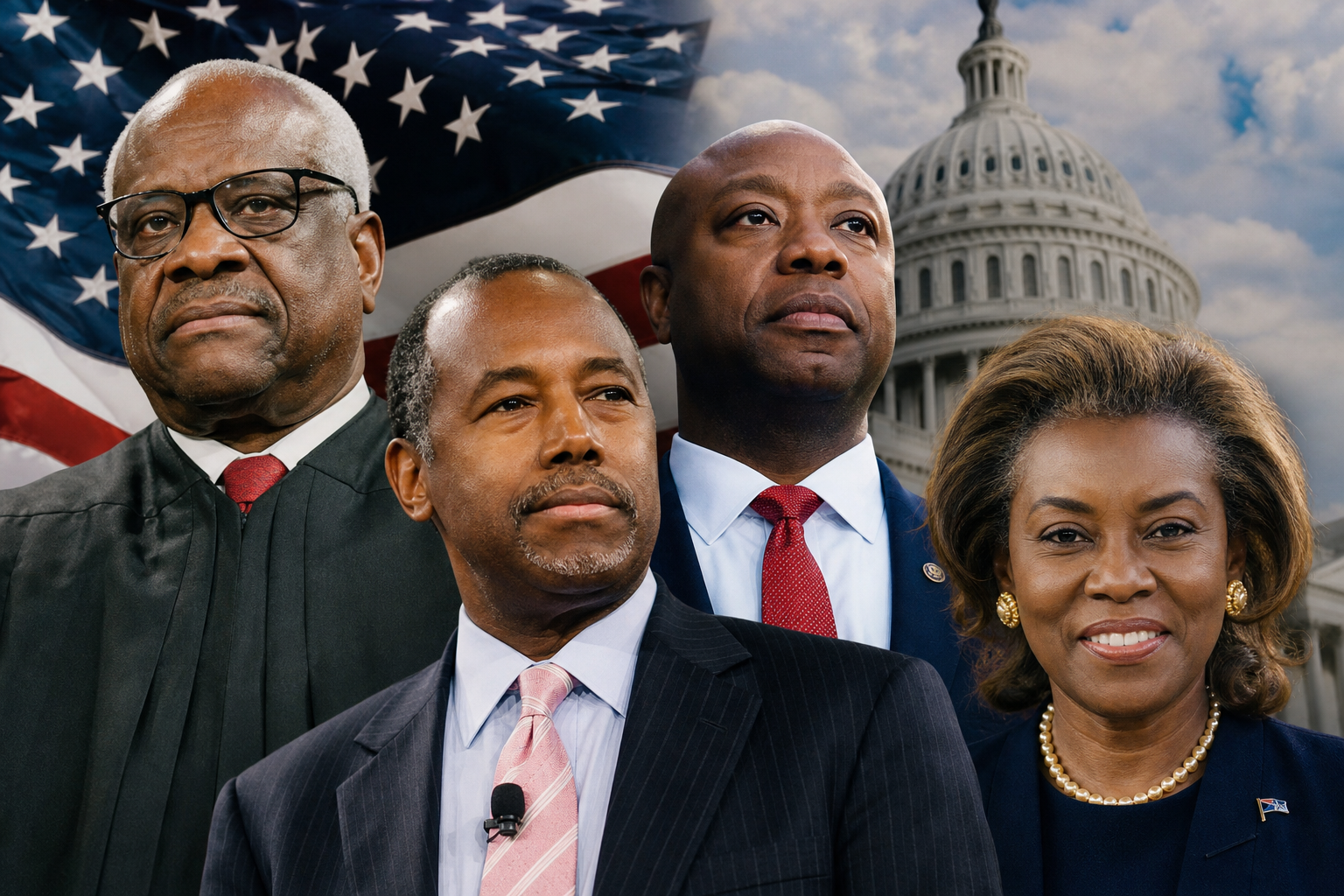
Perhaps no figure embodies the courage of this intellectual tradition more than Supreme Court Justice Clarence Thomas. For his entire career, he has withstood unrelenting attacks from the left for his unwavering commitment to the original meaning of the Constitution. Justice Thomas’s jurisprudence is a testament to the belief that our rights come from God, not government, and that the law should be applied equally to all, without regard to race. These pioneers weathered the storms of outrage and cancellation so that a new generation could stand on their shoulders.
A New Generation of Leaders Steps Forward
Today, that new generation is not just writing books or debating on television; they are winning elections and shaping public policy. Look at the landscape: Senator Tim Scott of South Carolina, who speaks powerfully about his journey from poverty to the U.S. Senate, championing economic opportunity and faith. Look at Representatives Byron Donalds of Florida and Burgess Owens of Utah, who bring their experiences as a businessman and an NFL champion, respectively, to Congress to fight for fiscal discipline and strong families.
And it's not just in Washington. In Virginia, Lieutenant Governor Winsome Sears, a Marine veteran and immigrant, became the first Black woman elected to statewide office, running on a platform of parental rights in education, Second Amendment freedoms, and support for law enforcement. These leaders are not anomalies. They represent a growing constituency of Black Americans who are conservative and are proud of it. They prove that you can be Black and believe in low taxes, secure borders, and a strong national defense.
Challenging the Narrative of Victimhood
At its core, the progressive worldview often frames Black Americans as permanent victims of systemic oppression, perpetually in need of government assistance and intervention. Black conservatism offers a powerful and liberating alternative: a narrative of agency, resilience, and empowerment.
Conservatives look at the problems plaguing many Black communities—such as crime, failing schools, and family breakdown—and see the results of decades of failed liberal policies. While progressives demand more funding for the same broken systems, conservatives advocate for real solutions:
- School Choice: Empowering parents to choose the best school for their children, breaking the monopoly of failing public school systems that trap too many kids in a cycle of poverty.
- Law and Order: Supporting our police and ensuring our neighborhoods are safe, because economic prosperity is impossible without public safety.
- Economic Opportunity: Cutting taxes and regulations to unleash entrepreneurship and job creation, allowing individuals to build wealth for themselves and their families.
- Family and Faith: Recognizing that strong families and vibrant faith communities are the primary pillars of a healthy society, something no government program can ever replace.
This message of empowerment is resonating. It rejects the soft bigotry of low expectations and instead champions the idea that every individual, regardless of their background, has the potential to achieve the American Dream through hard work, determination, and personal responsibility.
A Declaration of Independence
The rise of Black conservatism is more than a political trend; it is a declaration of intellectual independence. It is a refusal to be defined, controlled, or taken for granted by any political party. The left’s reaction to this movement—often characterized by vicious personal attacks, accusations of being a “traitor” to the race, and outright dismissal—reveals their fear. They are not afraid of the individuals themselves, but of the ideas they represent. They are afraid that once Black voters realize they have a choice, the Democratic Party’s lock on their vote will be broken forever.
The conversation is changing. Figures in sports, entertainment, and business are increasingly willing to voice opinions that don't fit the progressive mold, inspiring others to do the same. The notion that Black Americans must think and vote alike is a relic of a bygone era. The future is one of diverse thought, robust debate, and intellectual freedom, and Black conservatives are leading the charge.